

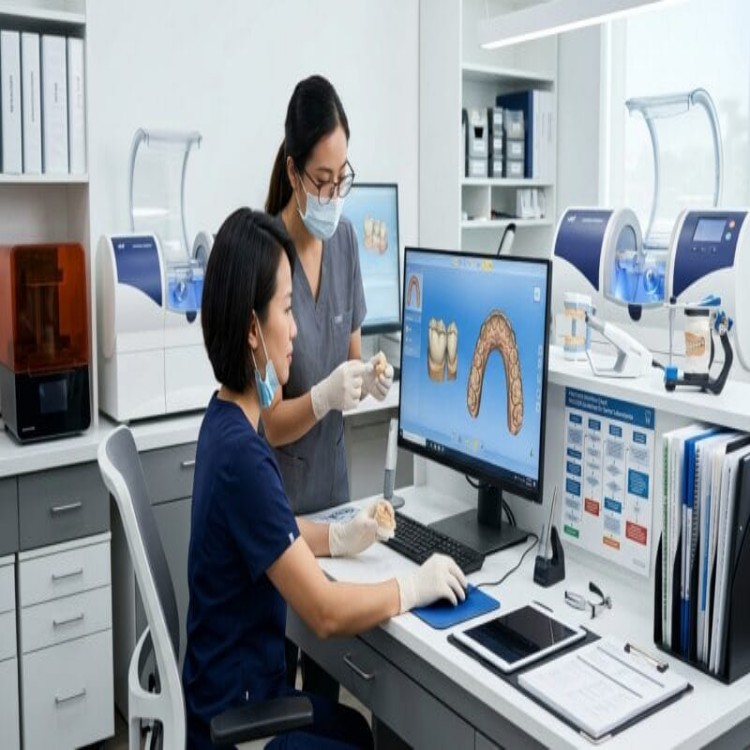
Dentistry has always demanded precision, but the margin for error has genuinely tightened over the last decade, driven largely by patient expectations and the technology now available to meet them. A crown that’s “close enough” used to be an accepted reality. Today, it’s increasingly seen as avoidable.
Part of this shift comes from measurement itself. Digital scanners can capture a tooth’s shape far more accurately than a putty impression ever could, and that data doesn’t degrade the way physical impression material can while it’s being poured, shipped, or stored. When the starting data is more accurate, everything built from it has a better chance of being accurate too.
Software has closed the other half of the gap. Design programs used for crowns, bridges, and implants can flag contact points that are too tight or too loose, margins that don’t seal cleanly, and bite interferences that would have gone unnoticed until the patient complained of discomfort weeks later. These checks happen before manufacturing, not after, which means problems get caught when they’re cheap and fast to fix, rather than after a patient has already sat through a frustrating fitting appointment.
Getting the full benefit of this precision usually means working with specialists who do nothing but this kind of design work all day. A dedicated 3d labo, for instance, reviews far more cases in a week than an individual clinic could generate on its own, and that volume builds a kind of pattern recognition for what tends to go wrong and how to avoid it.
For patients, the practical result is restorations that fit correctly the first time far more often than they used to. Fewer remakes, less chair time spent on adjustments, and a treatment experience that feels less like trial and error and more like something genuinely planned in advance.
The next time a restoration fits perfectly on the first try, there’s a good chance a great deal of quiet, careful digital work made that outcome look far easier than it actually was to achieve.