

Summary
Cold exposure and sauna therapy have moved from niche practices to mainstream recovery tools. Advocates claim benefits ranging from improved resilience to enhanced muscle repair. But what does the research actually show? This article explores the physiology behind hot and cold exposure, their impact on recovery and performance, and how they fit into a sustainable training framework.
Why Thermal Stress Is Trending
Cold plunges are everywhere. Saunas are being marketed as longevity tools. Social media is filled with morning ice baths and post-workout heat sessions.
The appeal is simple: controlled stress may trigger adaptation.
But while the concept sounds straightforward, the physiology is more nuanced.
Thermal exposure is a stressor. Whether it enhances recovery or interferes with adaptation depends on timing, intensity, and context.
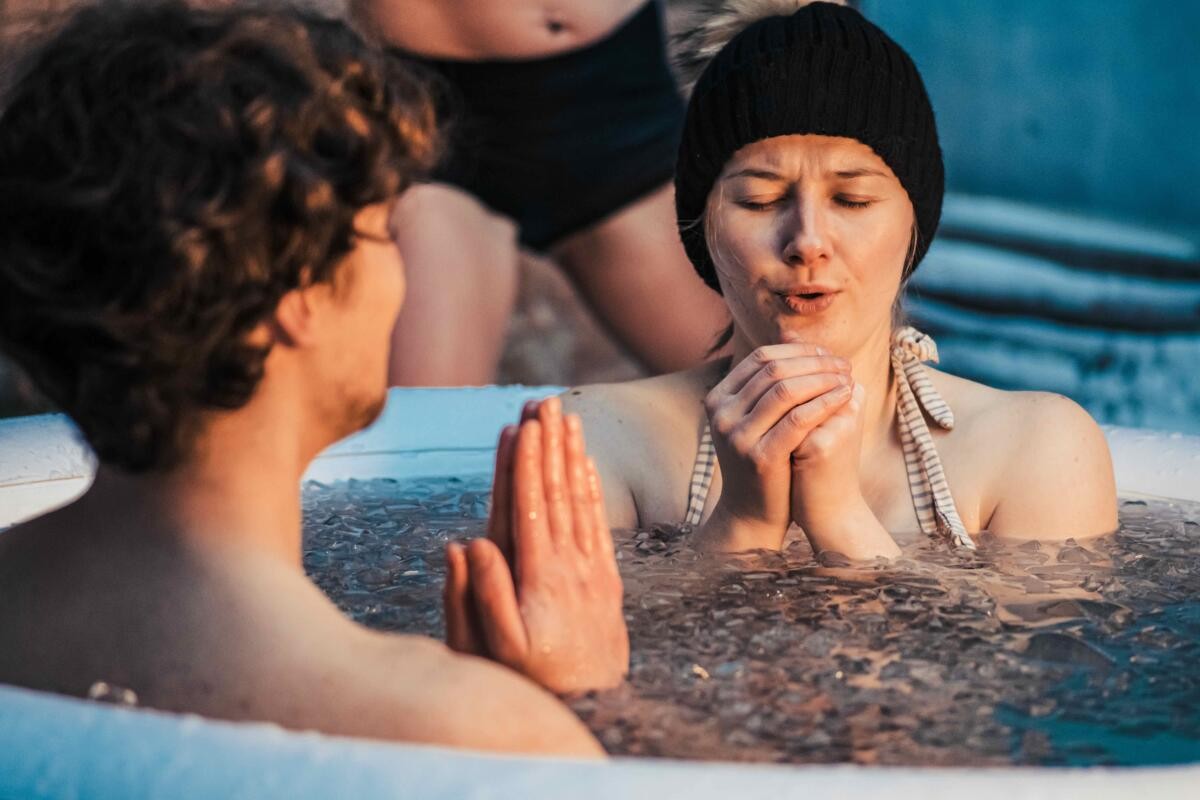
Cold Exposure: What Happens Physiologically?
When you immerse yourself in cold water:
- Blood vessels constrict (vasoconstriction)
- Heart rate initially rises
- Norepinephrine levels increase
- Inflammatory signaling may temporarily shift
Cold exposure is often promoted as an inflammation-reducing strategy. In acute injury contexts, cooling can reduce swelling and pain perception.
However, inflammation is not inherently negative. It is part of the muscle repair process.
Blunting inflammation immediately after resistance training may reduce hypertrophy signaling in some contexts.
Recovery and adaptation are not always the same goal.
Cold Water and Strength Adaptation
Some studies suggest that regular post-lifting cold immersion may slightly reduce muscle hypertrophy over time compared to passive recovery.
Why?
Because muscle growth requires an inflammatory cascade and cellular signaling response. Rapid cooling may dampen part of that response.
For endurance athletes, the trade-off may be different. Cold immersion can reduce soreness and perceived fatigue, which may allow for more frequent high-output sessions.
Context determines value.
Sauna Use: Heat as a Hormetic Stressor
Sauna exposure produces a very different physiological response.
Heat stress:
- Increases heart rate (often comparable to light cardio)
- Expands blood vessels (vasodilation)
- Elevates plasma volume over time
- Activates heat shock proteins
Heat shock proteins assist in cellular repair and protein folding. Repeated sauna exposure has been associated with improved cardiovascular markers and potential resilience against certain stressors.
Research from Nordic populations has linked regular sauna use with improved cardiovascular outcomes, though correlation does not automatically imply causation.
The American College of Sports Medicine acknowledges heat exposure as a conditioning stressor, though it emphasizes gradual adaptation and hydration awareness.
Contrast Therapy: Alternating Hot and Cold
Contrast therapy alternates cold and heat exposure in cycles.
The theory is that vasoconstriction followed by vasodilation may enhance circulation and recovery.
While many athletes report subjective benefits, objective performance outcomes vary across studies. Some evidence suggests improved perceived recovery, but measurable strength or hypertrophy advantages are less consistent.
As with most recovery tools, perception matters — but it should not override physiology.
Growth Hormone and Thermal Exposure
One reason sauna use receives attention is its temporary increase in growth hormone (GH).
Heat exposure can produce short-term elevations in GH levels. However, transient hormonal spikes do not necessarily translate into long-term muscle gain or structural change.
Endocrine systems operate within regulated boundaries. Acute elevations are part of stress adaptation — not magic switches.
The National Sleep Foundation reminds us that the largest natural GH pulses occur during deep sleep. In other words, consistent sleep likely influences recovery more than occasional sauna sessions.
Lifestyle foundations still win.
Where Emerging Research Fits In
In scientific settings, researchers examine various stress pathways — including thermal stress, mechanical loading, and molecular signaling — to better understand recovery and tissue adaptation.
Certain investigational peptides are studied for their interaction with growth factor signaling, inflammation modulation, and tissue repair mechanisms. These compounds remain largely in experimental or early-phase contexts and are not approved for performance enhancement.
Regulatory bodies such as the World Anti-Doping Agency prohibit many hormone-modulating substances in competitive sport.
For readers interested in understanding how laboratory research examines peptide signaling pathways in recovery science — including classifications and summaries of published findings — this independent scientific resource reviewing peptide research literature provides structured context:
A detailed research guide exploring peptides studied in recovery and growth factor signaling
Scientific exploration of molecular pathways does not replace foundational recovery behaviors.
Hydration: The Overlooked Variable
Heat exposure increases sweat loss. Cold immersion can blunt thirst cues.
In both cases, hydration matters.
Electrolyte balance supports:
- Plasma volume
- Muscle contraction
- Cardiovascular stability
- Nervous system function
Without adequate sodium and fluid intake, aggressive sauna use may impair performance rather than enhance it.
Recovery strategies should never undermine baseline physiology.
Practical Application: When to Use Each Tool
Rather than asking whether cold or heat is “better,” a more useful question is when to use each.
Use Cold Exposure When:
- Managing acute soreness between competitions
- Reducing swelling after minor strain
- Prioritizing short-term recovery over hypertrophy
Use Sauna When:
- Supporting cardiovascular conditioning
- Enhancing relaxation post-training
- Promoting parasympathetic activation before sleep
Avoid Immediate Post-Lift Cold Immersion If:
- Your primary goal is maximal hypertrophy
- You are in a muscle-building phase
Thermal tools are modifiers — not primary drivers.
The Psychology of Recovery Rituals
Recovery practices often provide psychological structure.
Intentional post-training rituals — whether mobility work, sauna sessions, or contrast showers — reinforce consistency and stress management.
Perceived recovery improves compliance. Compliance drives results.
The placebo effect is not necessarily negative. Belief can influence perception of soreness and readiness.
However, physiology still sets the ceiling.
The Bigger Recovery Hierarchy
Before adding advanced recovery modalities, ensure these are in place:
- Sleep consistency (7–9 hours nightly)
- Adequate protein intake
- Hydration and electrolyte balance
- Structured deload weeks
- Stress management outside training
Cold plunges and saunas sit below these fundamentals in the hierarchy.
Optimizing 80% basics produces greater returns than obsessing over 5% refinements.
The Bottom Line
Thermal exposure is a tool — not a shortcut.
Cold immersion may reduce soreness and support short-term performance recovery.
Sauna use may improve cardiovascular markers and promote relaxation.
Contrast therapy may enhance perceived recovery.
But none of these replace:
- Progressive resistance training.
- Adequate sleep.
- Nutritional sufficiency.
- Hydration stability.
Recovery is not about stacking stressors endlessly. It’s about creating rhythm.
- Train
- Recover
- Adapt
- Repeat
Emerging research into molecular signaling continues to expand our understanding of how the body responds to stress — but sustainable progress still rests on consistent fundamentals.