

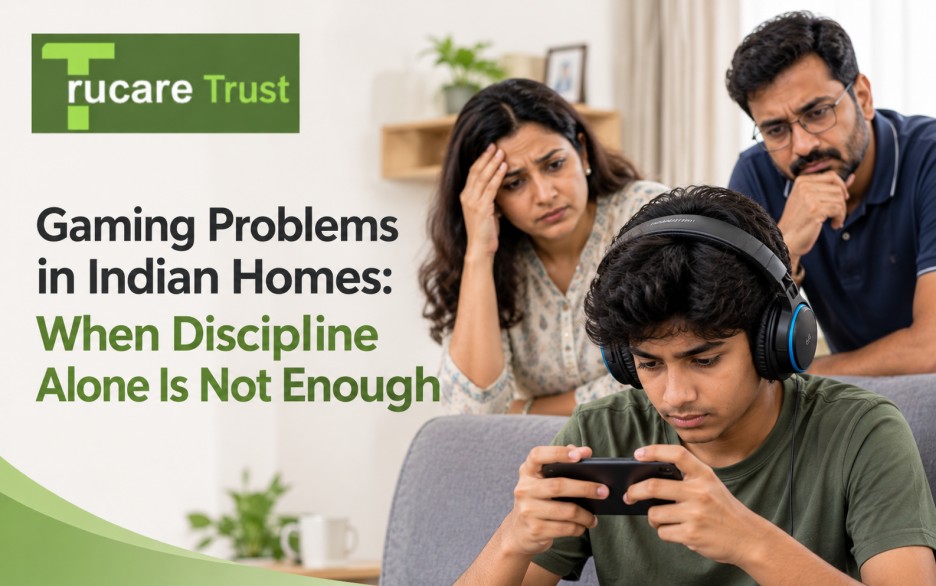
A teenager misses the school bus after a gaming tournament continues until 3 am. The next day, his parents remove the gaming console. He borrows a phone and starts again. Everyone calls it stubbornness. Yet the family may be dealing with a combination of sleep loss, compulsive play, family tension and an unmet need for friendship or achievement.
It is tempting to treat every form of excess as an addiction. That would be a mistake. The World Health Organization includes gaming disorder in ICD-11, but its definition requires impaired control, increasing priority given to gaming, and persistence despite harmful consequences, with substantial interference in life. The behaviour would normally have been evident for 12 months. High enthusiasm for a new game is not enough.
In many families, grandparents, parents and siblings all have an opinion about the phone. One adult permits a late-night game after homework, another demands the device immediately, and the teenager learns to bargain with each separately. A quieter, more consistent approach is to agree on two non-negotiables, such as sleep and school attendance, and review them at a fixed time each week. Tuition, extracurricular activities and travel time should be part of the plan: a timetable that ignores a two-hour commute or a coaching class is unlikely to last. The young person should help choose an alternative activity rather than being told simply to ‘go outside’.
Ask what the screen is doing for the person
For some young people, games provide reliable companionship when offline friendships are difficult. Others play to escape academic pressure, social embarrassment or conflict at home. Competitive rankings offer rapid feedback that school and work may not provide. A useful assessment explores these functions before it asks for restrictions.
Parents can begin with observations rather than accusations. ‘You missed four morning lectures this fortnight’ is specific. ‘You are wasting your life’ leads nowhere. Agree on protected sleep hours, meals without devices and responsibilities that cannot be skipped. Gaming boundaries should be consistent across adults in the home. A total ban can occasionally be necessary for immediate safety, but it is not a treatment model by itself.
A 2020 meta-analysis of gaming disorder studies reported a pooled prevalence of 3.05%, with substantial differences between studies and a lower estimate under stricter sampling methods. These are research estimates across countries; they cannot tell parents how many Indian children have the condition. The better test is sustained impairment identified by a qualified professional.
A different clinical pathway from substance detox
The term nasha mukti kendra is familiar to many families seeking addiction help. Yet gaming problems should not automatically be treated like alcohol or drug dependence. There is no substance to withdraw from, no routine requirement for detox medication, and no standard need for residential admission. Qualified mental-health assessment is more appropriate than an admission decision based on screen hours alone.
Support for gaming addiction may address sleep scheduling, behavioural habits, emotional regulation and family communication. Clinicians should check whether attention difficulties, anxiety, depression or learning problems are contributing. Educational institutions may be part of the solution if missed coursework can be recovered without public shaming.
Families sometimes ask whether gaming should be stopped permanently. There is no single answer. Goals depend on severity, age, the ability to control use and the role of gaming in the person’s social life. For some, carefully monitored participation may be realistic; for others, a period away from particular games is safer. The plan should be reviewed against actual improvement, not parental anger.
Parents may see disobedience; the teenager may hear that their strongest friendships do not matter. Neither view captures the entire picture. A helpful discussion takes place when everyone is rested, away from a game and not in the middle of a punishment. Ask what makes it difficult to stop, how online teammates react when someone leaves early, and whether there are worries about school or friends. Then describe observable concerns: missing a morning lecture, sleeping four hours or refusing meals.
Some games use daily rewards, rankings and limited-time events to encourage frequent return. That design can make boundaries harder, but it does not establish a psychiatric diagnosis. The WHO’s ICD-11 criteria still require loss of control, priority over other activities and significant impairment. Treat the young person’s account seriously even when the family disagrees with the choices being made.
A household agreement that survives the weekend
A workable agreement protects sleep and school first. Decide when devices charge, whether gaming is allowed during study breaks and what happens when a multiplayer game runs late. Parents should agree on rules privately before presenting them, rather than contradicting one another in front of a teenager. Offer a realistic exit point for a match; abrupt shutdown in the middle of team play may create an avoidable conflict.
Build in review. If the teenager follows the agreement for seven days, acknowledge that specific effort without promising unlimited gaming as a reward. If the plan fails, ask which part failed: unclear timing, untreated sleep difficulty, anxiety, poor impulse control or rules nobody could reasonably follow. A clinician can help when the same pattern continues despite repeated attempts or when education, relationships or health deteriorate.
When the parents need support too
Long-running conflict can exhaust the household. A parent may spend evenings checking online status, while a sibling avoids the living room. Family counselling can address communication and consistent boundaries without deciding that one person is the villain. Parents should also be supported if there is intimidation or violence at home; immediate safety comes before screen-time negotiation.
A young person who stops gaming but remains withdrawn, hopeless or unable to attend school has not necessarily recovered. Check for depression, bullying, attention difficulties and other problems. Progress may mean sleeping normally, eating with the family twice a week, meeting an offline friend or catching up on missed coursework. Those changes tell a more human story than the number of minutes displayed in a screen-time report.
One small measure can reveal a great deal: has the student started waking on time without a daily battle? Then look at attendance, social contact and the ability to tolerate disappointment. A child who plays fewer hours but remains isolated and distressed still needs attention. The purpose of intervention is to restore functioning, not merely to make the device silent.